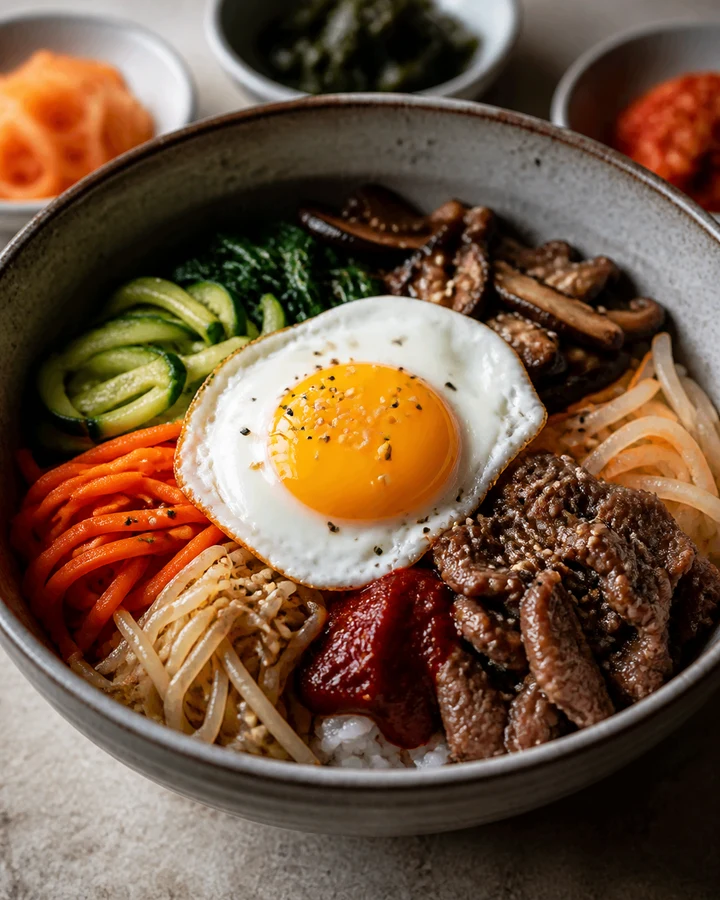
Bibimbap
Rice bowl with vegetables, egg, meat and gochujang chilli paste
7 000-12 000 KRWRestaurants in Jeonju, canteens
Age-old fermentations, social barbecue and ever-present gochugaru chilli. Korean cuisine is convivial, generous and deeply spicy.
Incontournables
Rice bowl with vegetables, egg, meat and gochujang chilli paste
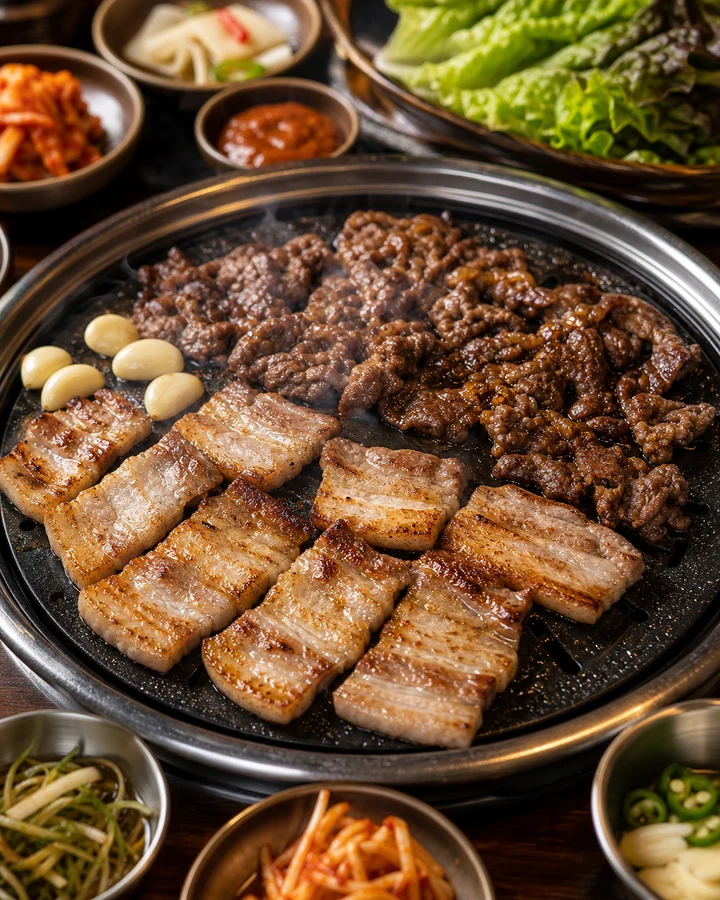
Meats grilled at the table (samgyeopsal, bulgogi) with side dishes
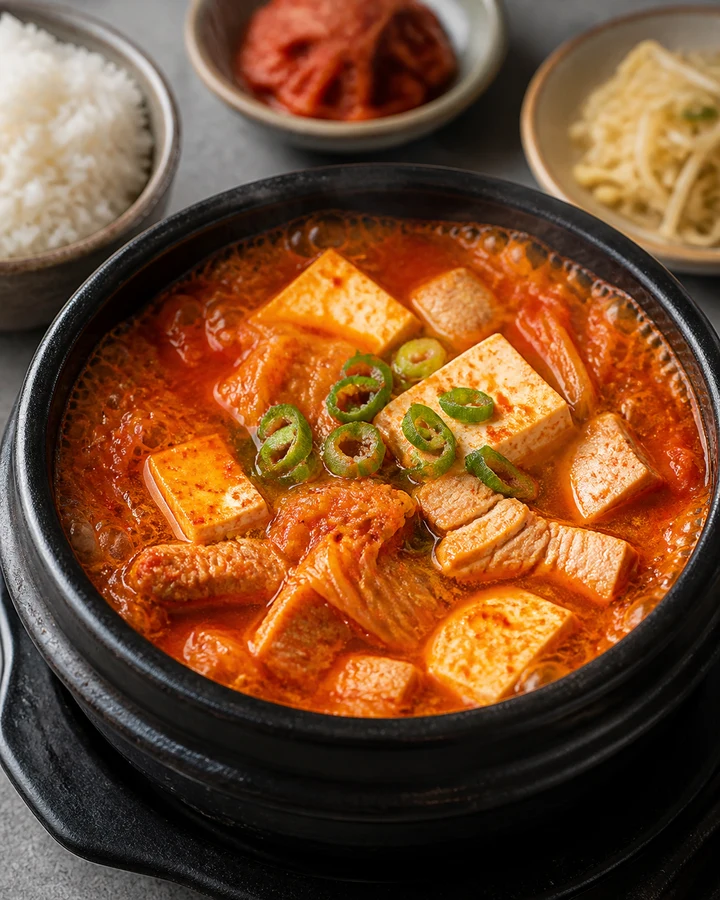
Bubbling stew of fermented kimchi, tofu and pork
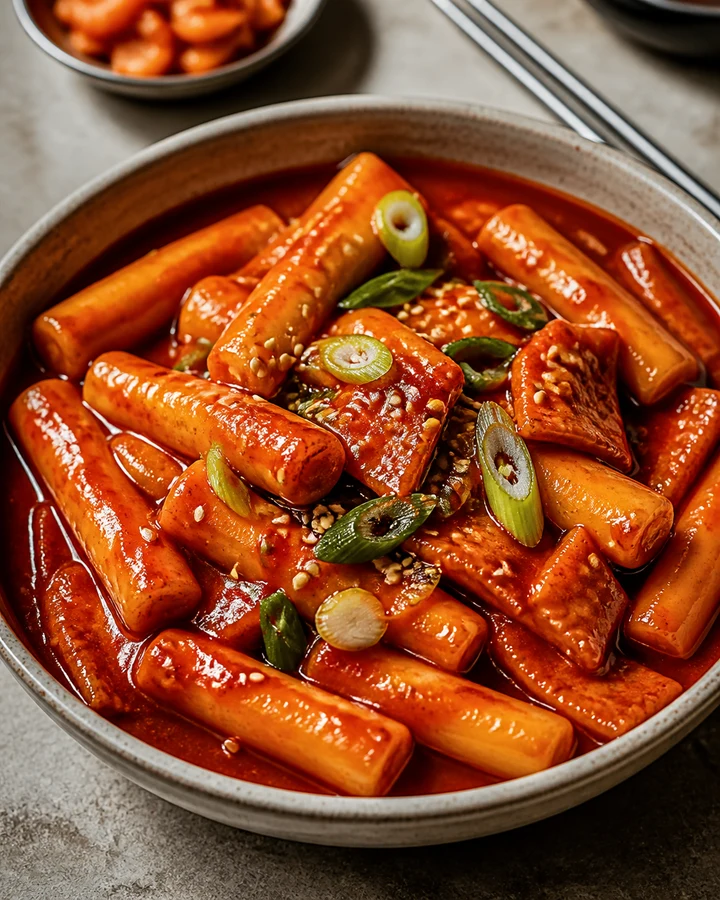
Rice cakes in a sweet-and-spicy gochujang sauce
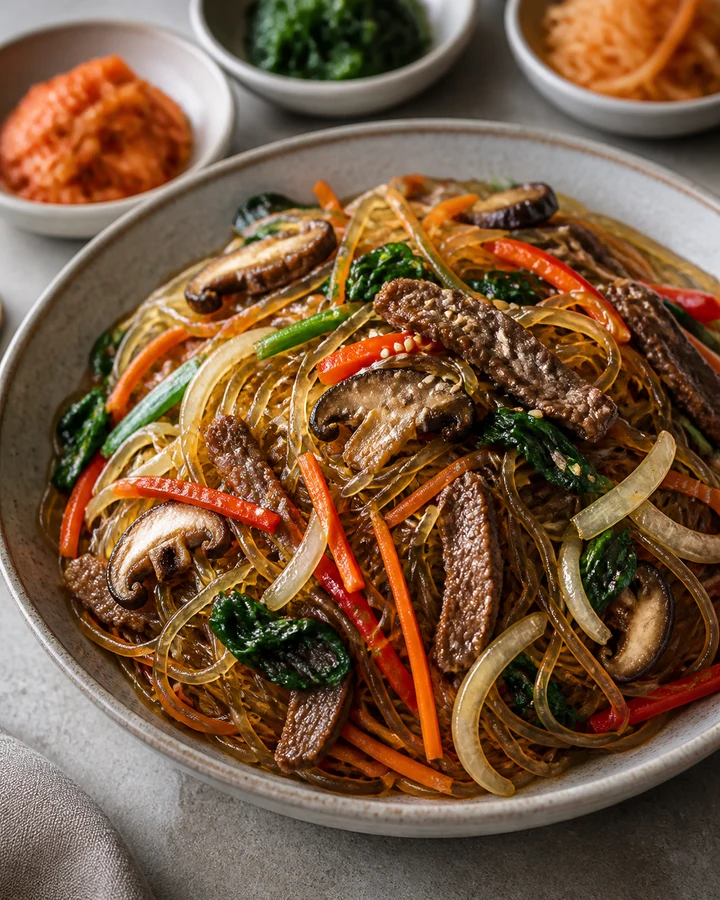
Stir-fried sweet potato noodles with vegetables and sesame
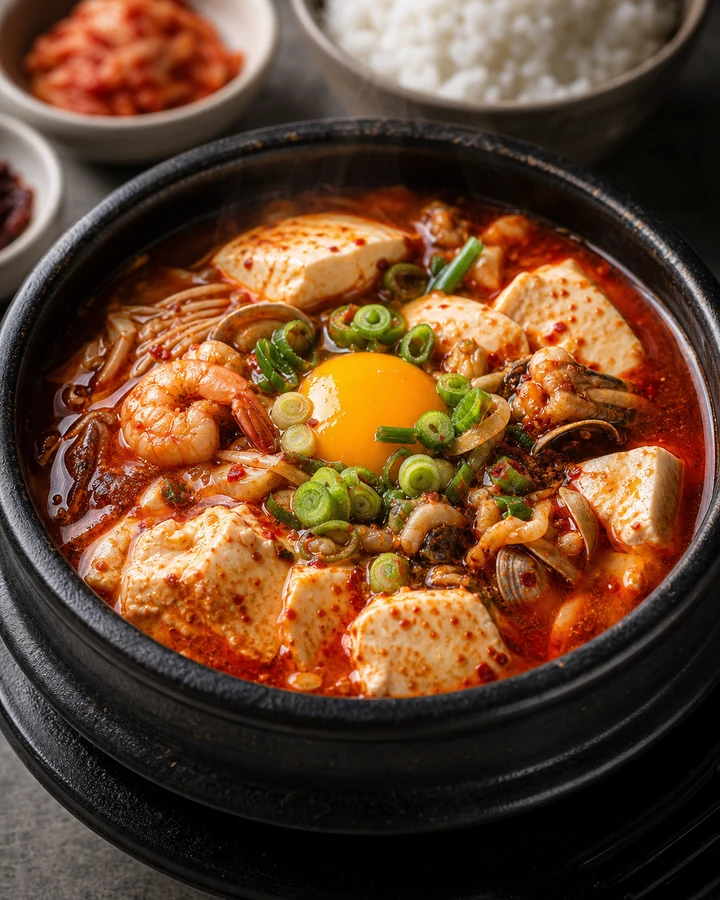
Very spicy silken tofu stew with seafood or meat
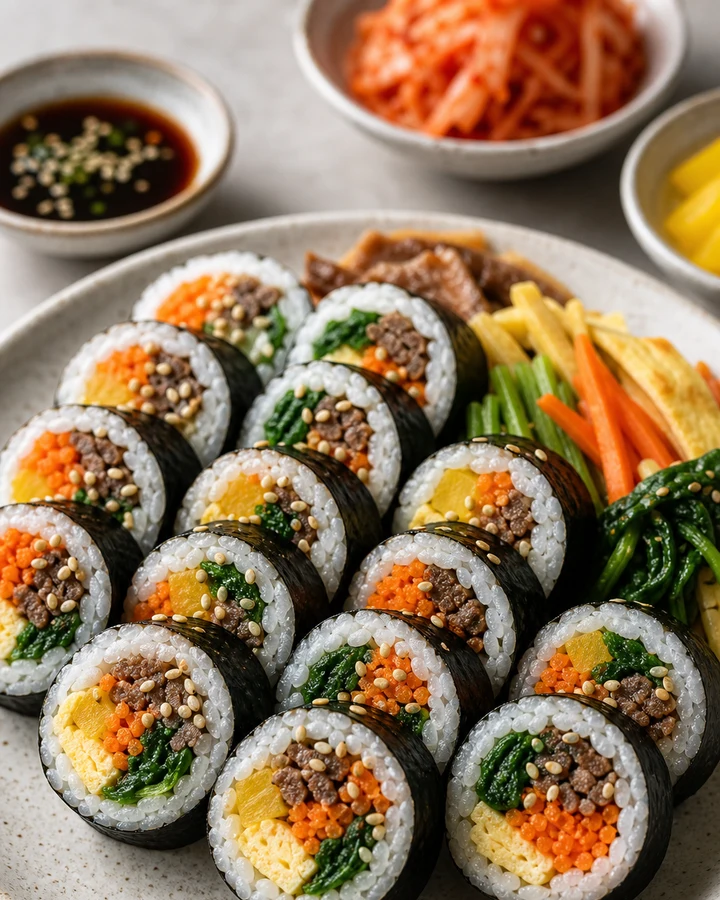
Rice and fillings rolled in a seaweed sheet
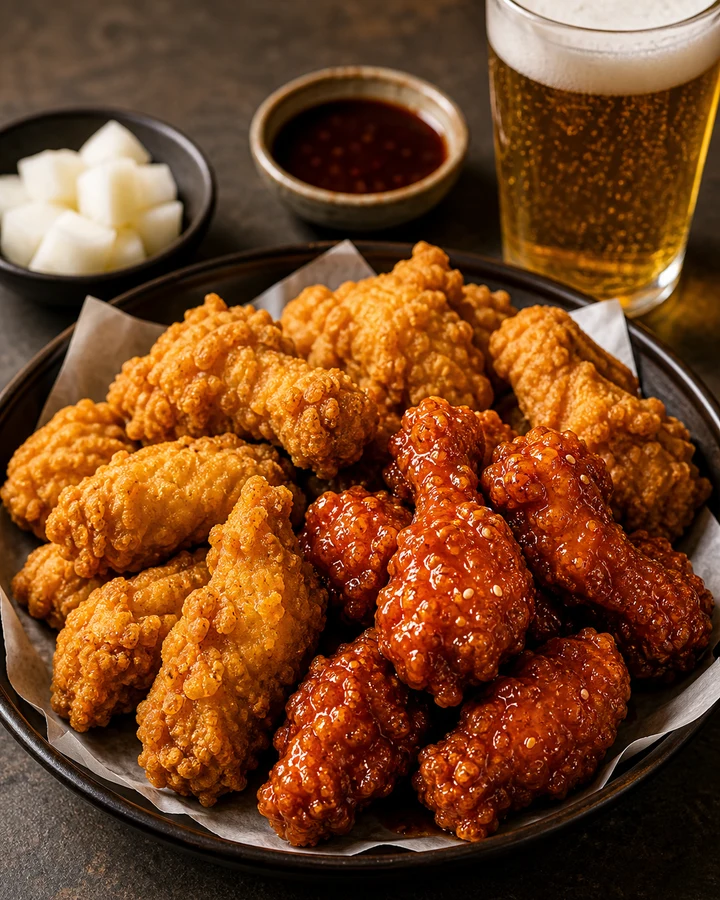
Korean fried chicken with beer, an evening ritual
Boissons
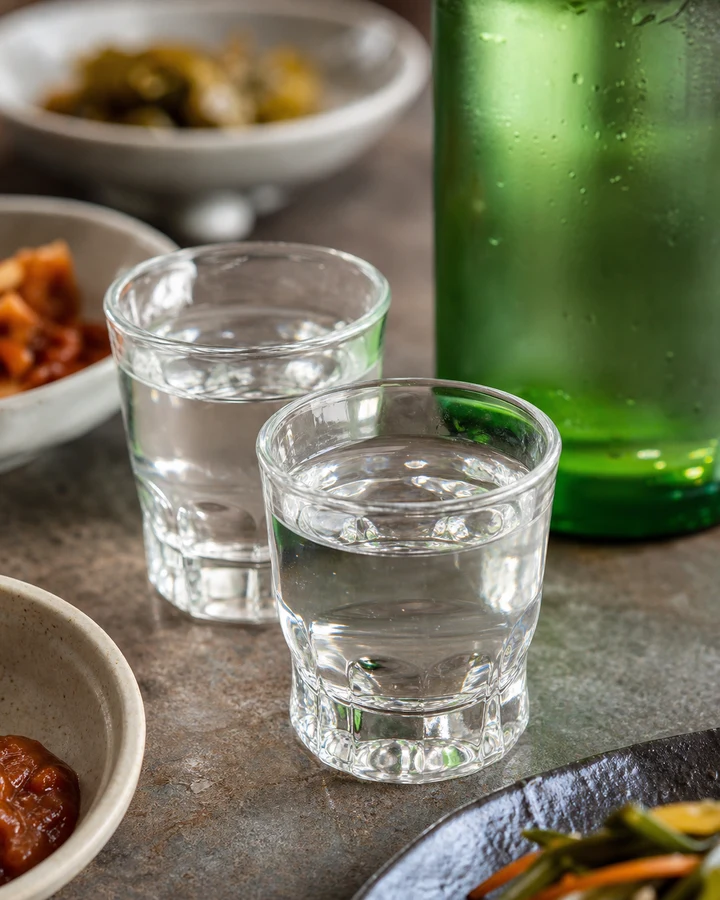
Sweet, strong rice liquor, drunk in shots among friends
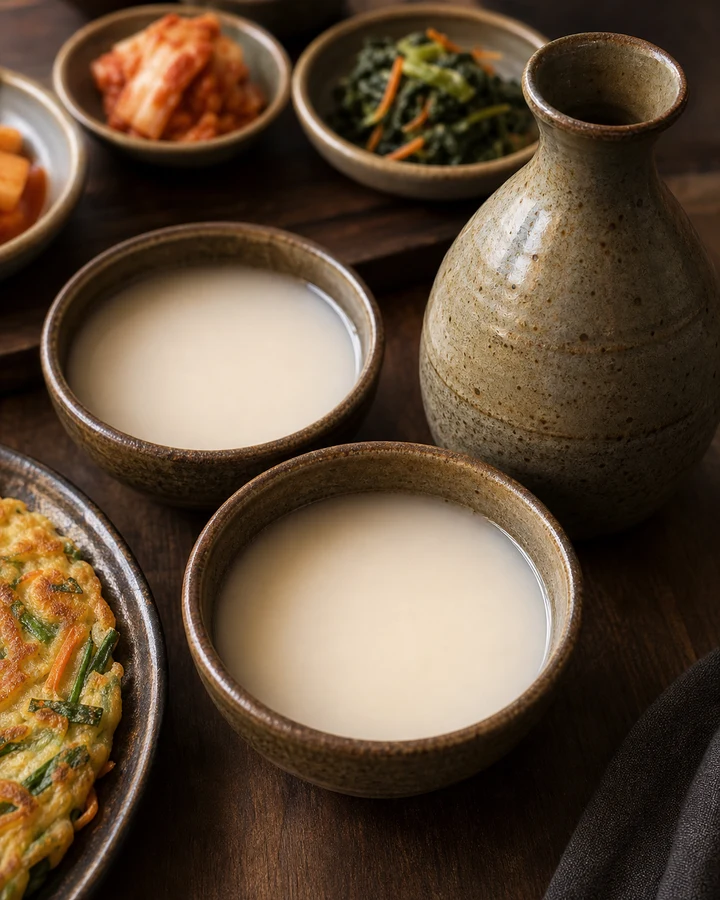
Milky rice wine, lightly sparkling and sweet
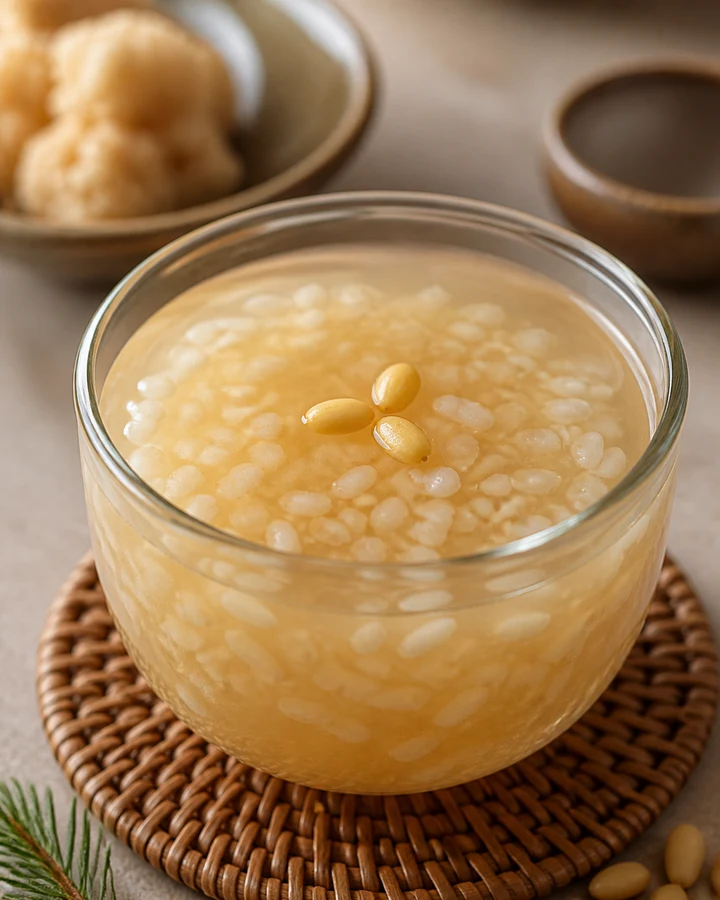
Sweet malted-rice drink, served as dessert
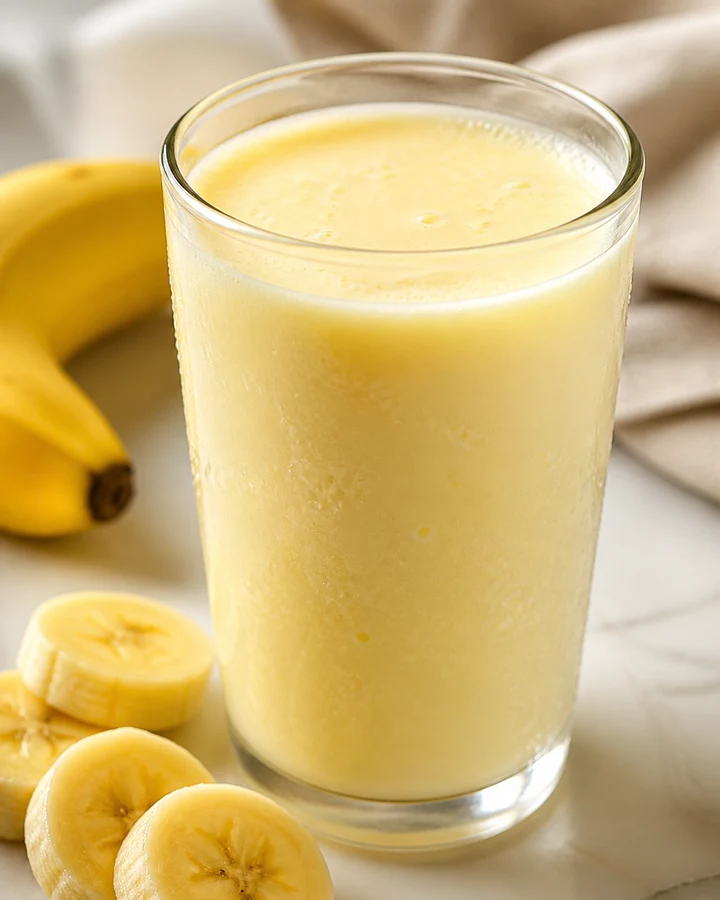
Iconic banana milk, sold in every convenience store
Street food
Vocabulaire
| Langue locale | Francais |
|---|---|
| Mashisseoyo | Delicious |
| Gyesanseyo | The bill |
| Kamsahamnida | Thank you |
| An maeweo | Not spicy |
| Mul | Eau |
| Bap | Riz |
| Jal meokgesseumnida | Enjoy your meal |
Etiquette
Let the eldest start eating first
Holding your bowl in one hand is rude (unlike in Japan)
You pour drinks for others, never for yourself
Turn your head away when drinking alcohol in front of an elder
Banchan (side dishes) are free and unlimited
Regime
Bibimbap is easily made vegetarian
Japchae is often meat-free
Korean temple food is entirely vegan
Note: kimchi often contains fish sauce
Say 'chaesik' to indicate vegetarian
Budget
2 000-5 000 KRW (1.40-3.50 EUR)
Stands de rue, marches, vendeurs ambulants
6 000-15 000 KRW (4.20-10.50 EUR)
Gargottes, cantines, restaurants familiaux
15 000-40 000 KRW (10.50-28 EUR)
Restaurants connus, zones touristiques
Les voyageurs Orizn partagent leurs restaurants et street food preferes sur la carte live. Rejoins la communaute.